
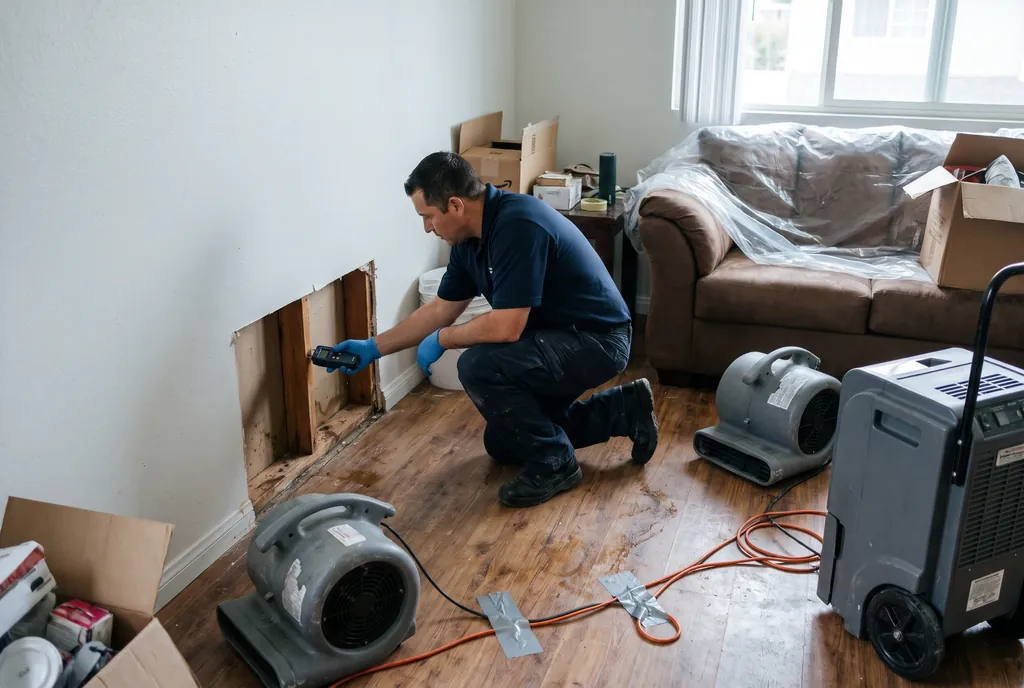
What we do
- Emergency water extraction
- Air movers and dehumidifiers
- Daily moisture readings
- Flood cuts when needed
- Mold check on every job
- Drywall, flooring and cabinet rebuild
Signs you need help
- Standing water or wet carpet
- Ceiling stains or bubbling paint
- Warm floor or running water meter
- Musty smell after a leak
One licensed team, cleanup to rebuild
Eagle Restoration is a licensed California contractor, License #1038469. Because we hold both Class A and Class B licenses and keep engineering in-house, the team that stops the damage is the same team that rebuilds it, permits included.
We're an IICRC Certified Firm, and we document every job with photos, moisture readings and line-item estimates at industry-standard pricing for your insurance adjuster.
Water damage: common questions
How long does it take to dry a house after water damage?
Usually about three to five days. It depends on how much water there was, how long it sat and what got wet. Hardwood, plaster and concrete take longer. We don't go by the calendar. The job is done when the meter readings say the materials are dry.
What are the categories of water damage?
The industry standard (IICRC S500) sorts water by how contaminated it is:
- Category 1: clean water, like a supply line or a tub overflow caught quickly.
- Category 2: some contamination, like dishwasher or washing machine discharge.
- Category 3: heavily contaminated, like sewage or floodwater from outside.
Clean water can turn into Category 2 or 3 the longer it sits.
Will you have to remove my drywall?
Not always. If the water was clean and caught early, we can often dry the wall in place by blowing air into the cavity. Drywall usually has to come out if it is contaminated, the insulation behind it is soaked, it has gone soft, or mold has started. When we do cut, we cut a couple of feet above the waterline to keep the repair small.
Can my hardwood floors be saved?
Sometimes. Hardwood dried quickly with floor drying equipment can often be saved, though some cupping may need sanding and refinishing. Floors that buckled, pulled away from the subfloor, or got contaminated water usually need to be replaced.